Data Recovery, recovering Hard Drive data, RAID data recovery

How to Protect Your Hard Drive from Damage

someone holding a hard drive in hand

If you’ve ever experienced a hard drive crashing before, you know how devastating it can be to not know whether your data is lost or can be recovered. In order to help you avoid this traumatizing experience, we’ve outlined a few things you can do that will help prevent damage to your hard drive.


Purchasing Considerations

When purchasing a new hard drive, there are a few choices you can make that can help increase the life of your hard drive. Before buying, make sure that you:

  • Choose a solid state drive (SSD): SSDs are more likely to save your data in the event of a crash because they distribute data across multiple memory chips. However, it can be harder—and more expensive—to recover the data with these types of drives.
  • Do not buy used: Most used hard drives are typically older. When you use an older hard drive, they are much more likely to fail sooner.
  • Research the history of a model: If a model is brand new, steer clear. Bad models will generally be discontinued after a few years. In addition, models that have been around for a few years will most likely have addressed any bugs or issues. A model that has been around for a while and has been tested is your best bet.

If you take care to do the above before purchasing, you’ll be less likely to experience problems.


Preventive Measures

If you already own a hard drive and are looking to prolong its life, there are a few things you can do to help keep it in working condition as long as possible. Keep it protected by taking the following actions:

  • Separate user data from OS installation: Before you begin using a computer or laptop, make sure to put the OS installation onto a different drive than the user’s home directories. Your device will be less likely to crash because the drive that has the OS installed on it will experience less reading/writing.
  • Protect it from surges: Prevent damage from electrical surges by using a UPS (uninterruptible power supply) or surge suppressor. If the power source is left vulnerable to interruption, you could risk damage to your hard drive, any open files, or the file system. While you may think this is common sense, you would be surprised at the number of people that don’t take this precaution.
  • Make sure it’s well ventilated: Without the proper ventilation, your system is prone to overheat. For this reason, you should keep your devices out of tight spaces and make sure the fans are functional. For extra protection, consider adding an additional fan, if possible.
  • Use an antivirus program: Not only should you install an antivirus program on your computer, but make sure to regularly run scans and keep it updated.
  • Be careful when moving your device: You should always be careful whenever you decide to move your device. Make sure to turn it off and wait until the hard drive has had a chance to stop spinning before you pick it up. If you are using an external hard drive, take extra care not to knock it over while in use.
  • Defrag the drive: If you defrag your device on a weekly basis, you can ensure that your machine doesn’t have to work harder than it has to for optimal operation.
  • Monitor the device: You can use the Windows chkdsk program to check for any errors that the hard drive may have. In addition, you can download an application that can monitor the condition of your hard drive and send you alerts when there is a problem.

By taking the proper precautions, you can ensure that your hard drive has a much longer life.


Experiencing issues with your hard drive? Memofix Data Recovery Services can help! We can recover data when other companies choose to throw in the towel. Create a case today to obtain a free diagnostic evaluation. We’ll provide you with a no-obligation quote based on the severity of your situation.

What is a CRASHED hard drive?

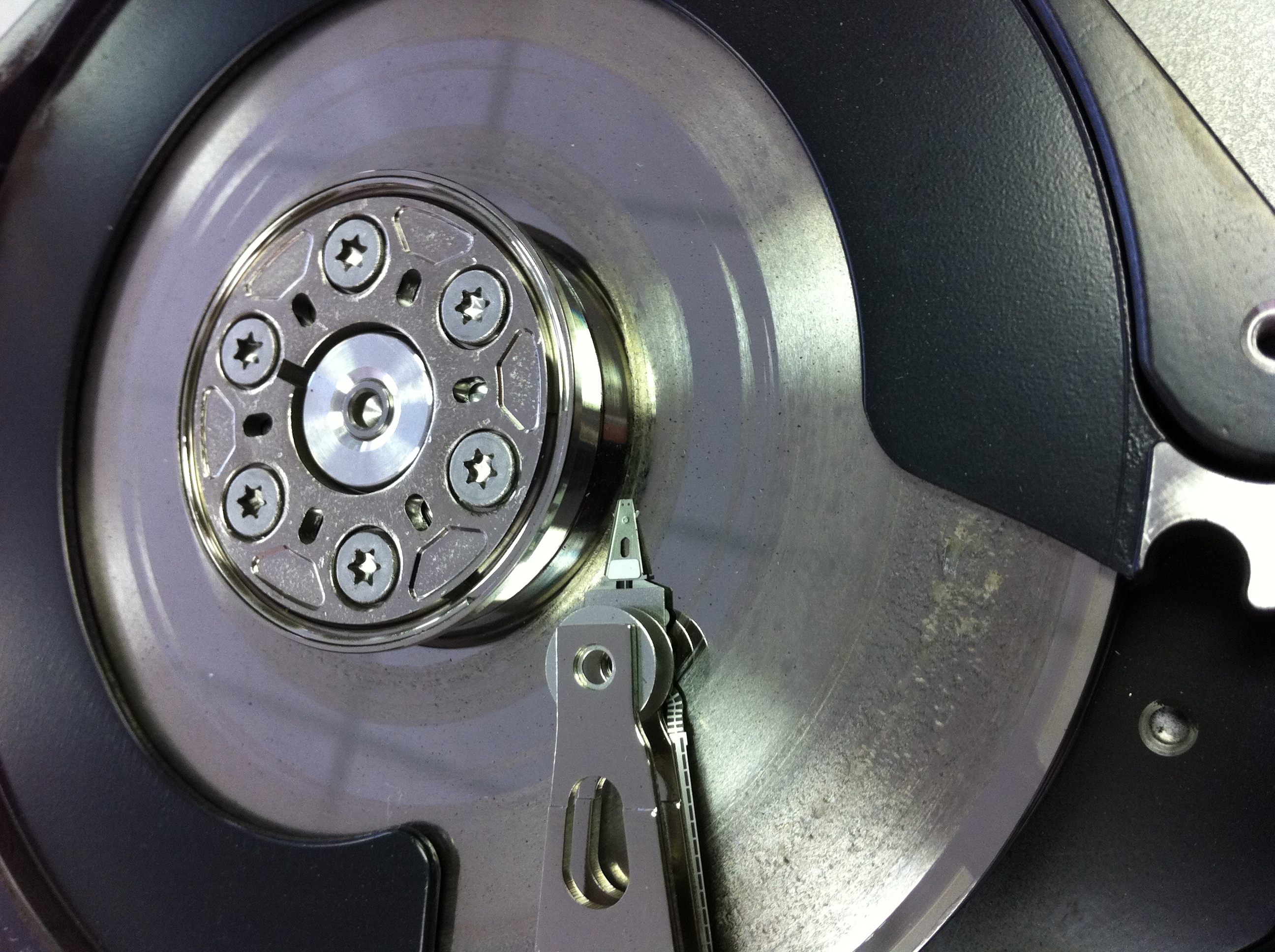
We hear the words “my hard drive has crashed” at least a hundred times a month and yet it is seldom what we discover when we open the lid of someones “crashed” hard drive. The picture below shows two Seagate 500 GB hard drives we recently received for data recovery. Both drives were declared crashed by their owners! However only one appears to be physically crashed.

data recovery toronto

The drive on the left is in pristine condition. The disks are extremely shiny and consistent across the entire surface of the disk surface. The clients problem was determined to be a bad PCB or printed circuit board.

The drive on the right is not so pristine and has physically CRASHED! The smooth shiny disk surface has been scored and ringed by constant contact with the heads while the disks were spinning. This amount of damage could only occur if the drive was left running for a long period after the initial contact damage. Click on the picture for a closer more shocking look.

The drive on the left should be recoverable. The drive on the right is NOT recoverable.

If you require a price estimate on our data recovery services, follow this link for a quick reply … Canada’s Data Recovery Experts

a terrible pic …

Data Recovery Toronto
the Data Recovery Blues

Sometimes the data is just not going to be recoverable! Here is an example of a badly crashed hard drive we received for data recovery from a disappointed Toronto client. Less then 5% of the hard disk drives we receive for data recovery purposes are in a similar condition. Typically this degree of damage begins with a lot of noticeable noise (clicking hard drive sounds) and escalates quickly into a total disaster!

and the Winner is ….

Memofix Data Recovery Services recently ran a data recovery survey on our corporate web site. In appreciation for completing the survey we entered all participants (except my Mom) in a draw for a free 2TB External USB drive.

Yesterday the draw was held and we are pleased to announce the winner is;

Alexandre Lemoine of ALTech Info located in Saint-Hyacinthe, Québec

Congratulations Alexandre!

We would also like to thank all participants for completing the survey. Your input was both valuable and greatly appreciated.

Remote Data Recovery

Toronto GTA, Ontario, Canada. Recovering data remotely is a service presently being offered by several of the larger data recovery companies. It sounds so convenient, no shipping, no computer disassembly, no risk, just call someone up and they remotely connect to my computer, and “poof” my data is restored. If only it were so simple. In reality it’s much more of a marketing ploy then a realistic recovery option. The complexities and dangers of offering remote service seem to counter the very pillars of data safety.

First you must consider that for a remote data recovery service to be successful the hard drive must be functioning properly; otherwise there is a serious risk of causing further damage. If the drive has physical problems and is beginning to fail, there may only a short window before the damage becomes insurmountable. As every data recovery company will advise, if the data is important, shut it off immediately and do nothing. So unless you’re knowledgeable enough to determine the condition of your hard drive or you don’t mind a 50/50 chance of doing further damage you may want to reconsider a remote data recovery service.

Furthermore, this service requires the user to have some technical computer skills as the original hard drive must be removed and installed in a second web attached computer along with possibly an additional hard drive to copy the recovered data to. Some assistance will also be required to setup and establish the remote link. And while some users may feel comfortable with these tasks, the real concern is with the increased risk of causing further damage whether due to physical handling, static shock, or the unintended running of automatic drive utilities like chkdsk.

It is our policy and that of most other professional data recovery services to create an exact image or mirror of the original drive. The original drive is then put away for safe keeping, while any alterations to the file system structures or running of utilities are completed on a copy of the copy. In a remote data recovery situation, you do not have the luxury of having a backup copy in case things go wrong.

We also see many cases of apparent file structure damage where the storage device or hard drive initially appears to be operating fine but as we attempt to image it we discover read errors or the drive starts failing in some other way. In instances like this there is a strong chance the file structure damage was actually caused by the physical issue. Attempting to recover data from a drive like this will just aggravate the situation and risk further damage to the storage device or filesystem.

In my past life, I worked for one of the larger data recovery companies that considered offering a remote recovery option. At the time we had multiple lab locations across the USA and we were already using remote connections to share the data recovery expertise spread throughout our different labs. Our more senior data recovery engineers essentially used remote access to evaluate and direct a more junior tech in how to proceed with a difficult data recovery. Prior to us offering the service to the general public, we investigated our competitors offering by conducting a secret shopper campaign where we attempted to engage their remote data recovery services. Surprisingly, we were repeatedly met with opposition when we requested a remote recovery. They tried to sell us data recovery software, followed by in-lab service before reluctantly agreeing to only attempt a remote recovery IF we approved a minimum of $1500 for the recovery if successful. And this was without ever looking at the media. It’s readily apparent that the entire concept was being used to get you to call them so they could then attempt to try and talk you into shipping the case to their lab.

Remote data recovery has most of same limitations and capabilities as that of a good data recovery software program. The drive must be functional and it must be connected to a working computer system. In many situations a data recovery program will perform as good as a remote recovery service. In fact, the remote recovery tech is more then likely going to be running utilities as part of the effort to salvage your data. So why pay for someone to hook up remotely and run utilities on your system. You can do that yourself and with less complications and time wasted establishing a safe connection.

There are a few occasions where remote data recovery does makes sense, where due to the isolation of the location there is no other option, but for those cases that can be delivered to a full service data recovery lab you would be very unwise not to take advantage of the hands on experience of a data recovery specialist. https://www.memofixdatarecovery.com/ … David Foster

Data Recovery pricing and why we’re NOT the cheapest

Toronto, Ontario, Canada. We are constantly reminded by our clients of just how expensive data recovery can be. No matter how much we attempt to prepare clients, many are still outright shocked at the cost. I can sympathize with many of our clients as I’ve experienced the same sensation at least a few times over the last year; like when I brought my car in for a simple brake job and the bill surged to almost a $1000; or when my furnace started making knocking noises and I was quoted over $1200 for a new blower motor. So what makes data recovery so expensive ….. or is it?

Just as your local auto service would not charge you the same price for an oil change as they would for a new exhaust system, Data Recovery pricing varies greatly. Some recoveries may take 20 minutes to resolve, while others can be on-going for a week or longer. Some problems can be handled by a junior data recovery technician, while others may require our resident genius to step in. Data loss may be the result of the accidental deletion of a few files, the dropping of a laptop or the failure of multiple hard drives from a 12 drive RAID array. Obviously the skill set and resources required to bring a crashed hard drive back to life or to reconstruct a damaged RAID array are much greater than the expertise required recovering a few deleted files.

Data Recovery is a service business with no guarantees. Sometime the data is just not recoverable no matter how much effort and parts we throw at it. And of course nobody likes to pay you for NOT recovering their data. So most reputable data recovery companies have adopted a somewhat unique service guarantee, where if we cannot recover the data you need, you will not be charged a dime. Consequently when data recovery jobs are quoted, the odds of us being able to recover the data successfully are built into the equation. In other words if we estimate the odds of a successful recovery are only 10%, then the recovery case will be quoted quite high. Looking at it slightly differently, if we attempt 10 such cases, we will be successful and get paid for just one of them. On the other hand, if our experience determines a recovery case is recoverable in 99% of the time, than the cost may be quite reasonable as there will be no risk factor built in.

What is you data worth? The most expensive data recovery I’ve been involved in was from a large world class hospital in one of the southern U.S. states. The hospital had been downloading all of its medical images, from ultrasounds to MRIs, to one server that was supposedly being backed up every night. When the server’s RAID array crashed one rainy night, they quickly learned their backup tapes were useless. The cost to re-book and recreate the over 200,000 images would have been in the millions of dollars, and many of them could never be replicated as the patients condition had changed. The job took us 3 months with a team of 4 techs and we ended up charging somewhere just over a $100K. And imagine this: we actually LOST money on it!

Providing a thorough and world class recovery service demands an investment in high end people and expensive equipment. Yes we could do data recovery cheaper like many on the web that scoop off the easiest cases and declare the rest unrecoverable (a real crime and disservice to everyone). Or we could charge ridiculous pricing like the big boys of the industry. But, doing just the easy cases so we are super profitable, or quoting everything super high so that when we do get an approval we make big money, is NOT our philosophy. We want to provide every client with the best chance of getting their data back and at a reasonable cost. Reasonable must mean we are able to be profitable enough to stay in the business and profitable enough to continue to invest in our people, our equipment and our processes. We have consciously set our pricing to be somewhere between these two extremes. A Guide to Data Recovery Pricing

So, if you find yourself in need of a data recovery service, please take the time to consider the value of your data. If it’s not worth much, go ahead and take a chance on a cheap fly by night recovery service or call you geeky brother-in-law Stan. But if you or your company can’t live without your data, don’t waste the first and best chance of a successful recovery with anyone but a professional recovery service like Memofix. … David Foster

External Hard Drives … SUV or Porsche?

Claremont, Ontario, Canada. At least every week we receive a few recoveries where the drive will not spin up. The problem is a physical issue where the spindle motor that spins the hard drive’s platters is seized. The cost of recovering from such a situation is quite expensive, but it may be possible to avoid such a dilemma.

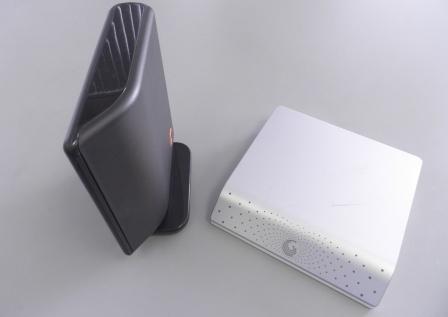
Manufactures design external enclosures that mount the drive either vertically or horizontally as shown in the picture below. Due to the high centre of gravity with the vertical units, they are extremely susceptible to being knocked over, which in turn may cause your hard drive’s spindle to seize. Avoid buying one of these vertically mounted external hard drive enclosure if at all possible.

External Cases

Vertically mounted (SUV) Horizontally mounted (Porsche)

While it’s true hard drives are designed to be mounted either vertically or horizontally, they are not designed to withstand much shock while operating. Approximately 10 years ago when hard drives were still designed with standard ball bearings in their spindle motors, they rarely seized. But in the quest for better performance, drives began using fluid dynamic bearings. With FD bearings, the metal balls were replaced with a layer of liquid. While there is no doubt that these bearings were superior in performance, they do have the disadvantage that under shock situations the fluid dynamic bearings can catastrophically seize. And that is what we are seeing so much of today. http://www.memofixdatarecovery.com/data-recovery-hard-drive.php … David Foster

FREE Data Recovery

Markham, Ontario, Canada. This is a story I love to tell. It reveals much of the human psyche and I find it fascinating

Back in the 90’s when Data Recovery type services were first starting to mature I was working for one of the pioneers of the industry, Nick Majors. Nick was a man of unquestionable integrity and honesty. So it was no surprise that nothing perturbed him more at the time than the massive influx of companies that suddenly “claimed” to be experts in data recovery. From cases that were sent to us for a 2nd opinion and through our own secret shopper program, where we sent data recovery cases to these so called experts, it became obvious that there were a lot of unscrupulous and opportunistic villains infecting the data recovery business. They made their money by getting in as many jobs as they could, charging an evaluation fee for each one, and then recovering the 10-15% of the cases that were the easiest (skimming the cream off the top as we referred to it back then) . They would do the cases where no parts and little intelligence were required … basically the cases that could easily be handled by any commercially available recovery software. Those they couldn’t recover were declared unrecoverable and the client was told they were out of luck.

So it was decided that we had a responsibility to save the world’s data from all these crooks and make some money off it at the same time. With huge fanfare and press releases, we announced our FREE-FIX program. Basically, we would recover people’s data for free IF it was a simple problem that we could resolve in 15 minutes or less. This would include logical problems with the file system, deleted files, formatted drives and pcb problems for common drives we had in stock. The program was intended for consumer users and was available on single hard drives with Windows or MAC data only. If we were successful, the client only paid for the return shipping and the media to put the data on. If the case was not eligible for FREE-FIX, we would provide the client with a no obligation quote for further recovery attempts.

We thought if we took the high road and did the easy stuff for free, we would kill this growing segment of con artists as they would not be able to survive without the easy jobs. And of course we also hoped that many of the ineligible cases would be approved for escalation into more desirable expensive jobs. We really felt that we would gain such a good reputation from this program that it would pay us back a thousand times.

Boy, were we wrong !!!! Yes most of the owners of the cases that qualified for FREE-FIX loved us. But the other 85% of the people were absolutely outraged at us. We were suddenly bombarded with irate clients wanting to rip a strip off of us. Those that we tried to “up-sell” because theirs’ was not a simple/free recovery, largely declined as they felt we were using bait and switch tactics. Even some of the 100 or so people who qualified for FREE-FIX every month thought we must be making money off the return media and the shipping. Shortly after the 1st month, the FREE-FIX experiment was cancelled and quickly disappeared into the growing mist of the World Wide Web, never to be heard of again. … David Foster