


Posts Tagged ‘Etobicoke data recovery’

WARNING - WARNING - WARNING

Monday, February 2nd, 2015

In my last blog I recounted how we managed to recover the data from a multiple hard drive RAID array AFTER two different European data recovery companies had failed. In that situation, we were the white knight, coming in to save the data where others had failed. But recently, we were painted as the villain for performing similar data recovery magic right here in Toronto. In fact, the title of this blog came from our 1st ever negative Google review as a result of this recent case.

To summarize, we received a 2.5” Western Digital WD hard drive for data recovery. The particular model drive sent in, has a USB3 interface built onto its PCB (printed circuit board) and it does not have typical SATA connections. From experience, we have found that data recovery imaging utilities (both in-house written and commercial) work terribly with USB interfaced hard drives. As a result, we don’t attempt to access or image USB3 type WD drives using their native USB PCB. Instead, we have learned how to convert a particular standard WD SATA PCB to work with these native USB drives.

So when we received this case, we immediately converted one of SATA PCBs to work with this drive. The conversion process required us to remove one small 8 pin programmable chip from the client’s original USB3 PCB and transfer it onto our SATA PCB. Once we did this, we were able to evaluate the drive fully and concluded that the drive had bad heads and likely minor disk damage. We contacted the client and quoted them $1300, which they declined. We transferred the client’s 8 pin chip back to their original PCB and returned the drive to the client.

The client then took it to another data recovery company who claimed it was unrecoverable because we had damaged the PCB and furthermore we left solder paste around the 8 pin chip and were thus “VERY AMATEURISH”. Ok we forgot some totally inconsequential solder paste on the PCB. But we never once applied power to the PCB so the claim we damaged it seemed unfounded. Of course there was a chance we damaged the small 8 pin chip so we suggested the client bring it back to us. They did; we removed the chip and verified it’s functionality using a chip reader. While it was here, we re-established the fact that we could still recover the data, but again the client did not want to pay us anything and left with their drive intact but with no solder paste residue to complain about.

Apparently, the client then went to KROLL ONTRACK, “the industry leader and the largest data recovery provider in Canada and in the world”. The client claims they also declared the drive unrecoverable due to the same “damaged” PCB.

The client then came back to us, and we again re-iterated that we had not damaged anything, and we could still recover the data for him. In fact, just to keep our good guy image alive, we offered to reduce the cost by $300. At 1st the client accepted thinking we offered the recovery at $300. But when he realized we weren’t giving it away and still required $1000 to complete the recovery he declined and created his mean spirited Google complaint.

Whether this client was trying to get a free recovery or not, I don’t know, or care, but in the end I am aghast that 2 other professional data recovery companies in Toronto cannot recover the data from a situation where we regularly do.

It helps to realize, that the world wide data recovery industry has no standards, no way of knowing a company’s competency, or a company’s integrity. There are lots of bad guys waiting to take your money for very little in return and many posers issuing inaccurate statements about what is recoverable and what is not. The damage they can cause is inexcusable. I have heard it said that something like 70% of small companies that lose their data permanently are out of business within 6 months. Don’t be one of them!

If your data is important, don’t believe the 1st “It’s UNRECOVERABLE” that you hear. Data recovery companies and technicians are not created equal. Please seek a 2nd or 3rd or 4th opinion, or maybe you should just come to Memofix Data Recovery Services first.



Hard Drive Substitutes or Data Killers?

Thursday, May 3rd, 2012

Since shortly after the inception of the hard drive into the PC or personal computer, there have been doubters! Even as hard drives grew larger, faster and more reliable, there have been those who constantly called for its replacement. No other product has improved at a faster pace in every measurable specification than the hard drive, and yet it still gets no respect! The hard drive is still here and still going strong after more than 50 years. Has the time come for a new champ?

data recovery toronto

Back in 1985, I repaired my first hard drive. It was a 5MB hard drive made by Seagate called the ST506. The ST506 had actually been introduced a few years earlier at a list price of $1400! It was the 1st hard drive mass produced for the emerging personal computer market and its interface quickly became the world’s standard … well at least for a few years. The ST506 hard drive had 156 tracks or concentric rings of data on each disk surface. In comparison todays modern hard drives have over 200,000 tracks, can hold up to 4TB or 4,000,000 MB and often cost less than a $100. For a visual comparison, I dug up an old ST506 out of our inventory and took a picture of it along with a modern 500GB laptop hard drive.

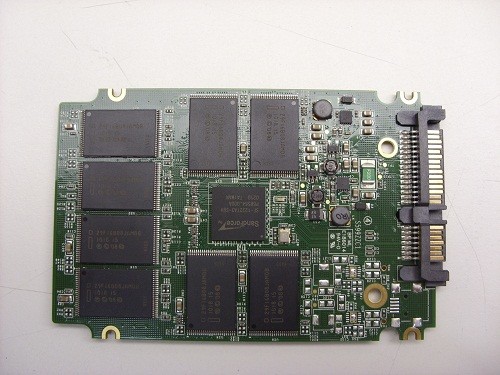
Today we have two contenders trying to put the old disk drive out to pasture: the SSD or Solid State Drive and Web Based Storage. Both are worthy contenders offering advantages a hard drive just can’t compete with. An SSD offers lightning fast access times and the reliability of no moving mechanical parts. Web based storage offers the convenience of having your data available around the world 24/7, 365 days a year and the perceived reliability of virtual storage. But are these storage methods the end and be all?

Contender#1 … SSDs or Solid State Drives with their blazing speed and growing capacities appear to be a fantastic replacement for the hard disk drive, but be aware they are far from being the perfect digital storage device.

SSD data recovery

These early days of Solid State Drives, reminds me a lot of the hard drive industry as it was first developing. In those early days there were over a hundred different manufactures of hard disk drives. Now there are just 3, Seagate, Toshiba, and Western Digital. Similarly, today we find well over a hundred companies manufacturing SSDs. And just like the hundreds of early hard drive manufactures, each one is trying to distinguish it’s technologies as the best and capture the most market share. Some of their ideas will be fantastic and will be quickly adopted as standards. Other not so good ideas, may result in the demise and eventual death of many of these companies.

A quick search on the web uncovers hundreds of complaints regarding the early failure of various models of Solid State Drives. The point is … there will be a weeding out process where the weaker products and companies are culled from the herd. And as a consequence it is still a little too soon to know which SSDs and technologies to trust, and which to avoid.

There is also an ongoing debate over the life expectancy of SSDs and whether they can withstand the same amount of lifetime write cycles as a typical hard drive. And while I don’t believe this is, or will remain a problem to be concerned about, there is another rarely mentioned quirk with SSDs. If you copy data to an SSD and detach it from any computer or power source, the data will eventually disappear! This is because SSDs use electronic components which are “charged” to represent a digital 1 and over time this charge leaks out and all the bits return to digital zeroes. So if you think you can copy your precious baby pictures to an SSD and put it away for 10 or 20 years, think again! Actually, just how long the data will be retained is open to argument and something no manufacture appears to mention. I have heard data retention times as low as 1 or 2 years and perhaps as high as 10 years from some authorities. So be careful, or be sure to periodically attach your SSD to a computer or power source so that the data will be refreshed. By the way, I have connected and booted up an old 20MB Seagate ST225 hard drive that has been sitting on a shelf for just under 20 years and all the data was intact and readable.

Contender#2 … Online or web based storage really does promise perfection, or at least so it appears on the surface. But what guarantees do you really have that your data will be there when you need it? Everything is out of your control. And if the web is down or inaccessible, then you basically have no data.data recovery Ontario

To illustrate my concerns, a recent experience of mine may help. Having used Google’s Gmail for almost 10 years with never a problem, I recently persuaded my wife to open her own Gmail account for her own personal emails. Then six months after the switch, her emails suddenly disappeared. Of course it was my fault for persuading her to switch over to Gmail, so I was tasked with getting her emails back … What I found was rather discerning; there is no real process, and definitely no person to help you recover your mailbox data should such a calamity bestow you. Google basically says “Oh well, what do you expect when something is free?” To which what can one say? Of course the solution is to use an email agent like Eudora and download your emails to your local machine. But then doesn’t that defeat the purpose of on-line storage?

Not to pick on Google, (they should be prepared to defend their “web only” cheerleading), but I have another example based on their product, Google Docs. It is touted as a web based replacement for MS Office. It allows a user to create, edit and store MS Office type documents on the web. But after my experience with Gmail, I must wonder what recourse there will be if suddenly all your documents go missing? I hope this problem of no accountability for the safety of a user’s data is isolated to those offering free storage services. But with Google setting the precedent of giving storage away for free I am afraid other web based program providers will do the same.