Data Recovery, recovering Hard Drive data, RAID data recovery

YES we can recover your data, even if others can’t!

As a member of a worldwide consortium called the TSC or Technical Services Consortium, we are part of a family of companies that offer many of the same services, but in different geographical areas. Because we are not competing with each other, we have developed some amazing business relationships with folks that would normally be our competitors. This has allowed us to gain knowledge in areas where we were weak and to share knowledge where we are strong. As the only member of the consortium offering data recovery services, we often get called in to help with data loss situations.

Recently one of our TSC partners in the Netherlands, Sprague Europe, was approached by a well-known University in Germany. The University had had a catastrophic failure with a small RAID 5 server and the hard work of hundreds of students was in jeopardy. RAID server data recovery

Initially the University had contacted a well-respected but smaller data recovery company in the Netherlands to help. They were able to image one of the 3 drives used in the RAID 5 array, but unfortunately, all attempts at resurrecting either of the remaining two drives was met with failure.

With RAID 5 and it’s built in redundancy, we only needed to image one of the two non-responsive drives to be able to rebuild the RAID. Both drives had developed light rings on their disks and the heads were physically destroyed by travelling over the damaged areas and had become stuck in the head loader ramps. With each recovery attempt, these rings would increase in depth and width, and soon no recovery would be possible. The smaller Dutch data recovery company had exhausted their supply of parts drives and realizing the chances for success were decreasing with each attempt, they advised the University to send it to Kroll Ontrack, the largest data recovery company in the world. Ontrack had a branch in Germany and off the case went.

But again, all attempts to recover the data were met with failure and the University was almost ready to concede defeat. But as luck would have it, the head of the University’s Computer Centre was an old colleague with one of our friends at Sprague and in a last ditch effort he called Sprague for advice. Our friend at Sprague suggested Memofix “may” be able to help.

Unlike most data recovery service providers, Memofix does not charge an extra fee for working on hard drives that have been previously worked on by other data recovery companies. In fact we cherish those data recovery cases because it gives us a chance to show just how good we are. Over the years we have recovered approximately 70% of the recoveries that have been previously attempted by our competitors.

western digital data recoveryWhen I first saw the request and the summary of what had been attempted, I was skeptical if we could do any better than the two professional data recovery companies that had already tried, especially when one of them was a “world leader” in data recovery and cost did not appear to be a constraint. I spoke with the original data recovery company that tried the 1st attempts. They told me that both defective drives had heads that were bent, distorted, and stuck in the head ramp loaders. They also told me that they had gotten both defective hard drives to function for a very short period of time after replacing the head assembly. Things were looking a little more promising.

When it comes to recovering data, there is one MAJOR factor that influences the chance of recovering data and that is the condition of the disks. If the disks are in good shape, a recovery is usually going to be possible. If the disks are badly scored and ringed, then it will be next to impossible to get a set of heads to function inside the drive without damaging them almost instantaneously. For a disk to get that badly damaged usually means the drive has been running/spinning in a crashed state for a long time. The fact that these drives had their heads stuck in the loading ramps is good news, as they could no longer damage the disks. The second fact that made us hopeful was that the drives were manufactured by Western Digital and Memofix has one of the best Western Digital data recovery techs that we have ever met and we do know a lot of data recovery techs.

So we decided that we may have a chance of successfully recovering at least some of the data and consequently the case was sent to us for a final data recovery attempt.

Our initial evaluation confirmed that we would need to get one of two defective drives imaged. After much scrutiny it was determined that one of the defective drives had shifted disks. When heads are replaced, there is a procedure for adjusting the disks which can sometimes help in getting access to a non-responsive hard drive. I suspect one of the data recovery service providers had attempted this procedure or something similar. This procedure can sometimes make things worse, so we decided to concentrate on the more pristine of the two drives.

Our Western Digital data recovery specialist got right to work. His first task was to get the drive functional enough to read off the drives system area, a normally inaccessible storage area on the drive used for its own housekeeping and the storing of drive specific settings. The system area tells the drive how many heads are present and what settings to use with each head. Without this road-map, recovery may not be possible.

bent heads comparison
Bent Heads vs Good Heads

We quickly determined that two of the disk surfaces had physical damage and we would worry about those surfaces last. Modifying the system area allowed us to configure the drive to ignore the 2 damaged heads/surfaces. We then physically removed the 2 heads (corresponding to the damaged surfaces) from a good parts head stack. This would prevent further damage to those disk surfaces as well as preventing read interference from the heads going over the damaged areas. We then used this head assembly to get the drive to initialize and we started to image off the good surfaces. After approximately 20 hours of imaging, the heads assembly became too contaminated with crash debris to function and we had to modify a new set of heads to continue. After two days we had managed to image 6 of the 8 disk surfaces. We were now ready to go after the two damaged disk surfaces.

At this stage, our greatest danger was the inherent risk of developing new crashes & destroying our chances of imaging off the last two disk surfaces. Consequently, the drive was imaged only while it could be monitored by a dedicated human watching and listening for any potential new crashes. Imaging of these last two surfaces took almost a week and in the process we consumed five sets of heads and still had some areas where nothing could be read because of the damage to the hard drives’ disks.

With the best drive images we could obtain, we began to analyze what we had. Once we determined the correct RAID 5 configuration settings we were able to use the RAID’s parity to virtually rebuild the missing disk and to de-stripe the 3 drive RAID 5 volume onto a single drive. Then it was a matter of repairing some minor file system structure damage, mounting up the volume, and copying the data to a new target hard drive.

In the end, we were able to recover over 99% of all the students’ data. But there wouldn’t have been any data recovery had it not been for one individual at the University refusing to take NO for an answer.

Consequently, I think the real takeaway point, has to be the fact that not all data recovery companies have the same abilities and just because the world’s largest data recovery company says it can’t be done, doesn’t mean Memofix, the world’s most determined data recovery company, can’t prove them wrong.

We are Memofix, and YES we can recover your data, even if others can’t!

Emergency RAID & Server Data Recovery (647) 448-5302

During the holidays many companies use the down time as an opportunity to update and perform maintenance on their data servers and RAID boxes. This is also a crucial time for data loss to occur, and a time where caution and safety should be of the utmost importance.

At Memofix, we understand that mistakes can happen, hard drives can crash, and servers do become corrupt, so we want you to know, whether you’re in Toronto or anywhere in Canada, we are ready and able to help 24-7, 365 days of the year. If you face a serious data loss & need our emergency data recovery services to ensure your business is back up as soon as possible, please call or text David Foster @ (647) 448-5302 to discuss your situation and how we can help … any time any day.

Happy Holidays to All! … from David Foster & my amazing team at Memofix Data Recovery


Kindness Changes Everything!


Memofix was recently asked to help out a fellow Canadian who had lost the latest pictures of his deceased wife after his computer became submerged in the recent Calgary and High River, Alberta floods. Memofix’s expertise with water damaged hard drives was invaluable in recovering the data and putting a smile on a saddened face. Here’s a letter of appreciation we recently received for our gratuitous assistance.

Despair to HOPE!

This is a story of how a few acts of kindness can build hope in a person’s life

My name is Rick Ellis and I am one of the thousands of displaced citizens of High River, AB after the floods of 2013 but I consider myself lucky to have met a few “angels” during the anguish of these times.

I lost my wife Chris AKA Princess on the 14th of June, 2013. Less than a week later, on June 20, we were hit by the worst flood in our history. I had gotten our computer, Ipod and cellphone out before the flood but left them at my place of work not dreaming that they would be in any danger there. More than a week later they let my employers back into the building to retrieve valuables and \my employers, Tony and Penny Marshall of Highwood Crossing Foods, who are angels in their own right, retrieved my bags for me, one that held my clothes , one that held our valuables,computer etc.and one of important documents. Upon arriving at the TIDE loads of hope caravan I opened my trunk to retrieve my bag of clothes that had been sitting in the flood waters for over a week. A volunteer came out to help me unload my clothes and when he grabbed my bag with the electronics in it I broke down and told him of my wifes passing and that I was going to try and recover any info I could off of them. This complete stranger then offered to make a few phone calls to see if he could help me. This truly caring person was David Brodie, vice president, Western Canada of Citizen Optimum. He was from Vancouver and yet he was out in the middle of this disaster helping people unload their few remaining clothes to be washed for free by TIDE.Within two days I received a call from Mr Brodie to take all my electronics into Future Shop in Shawnessy, Calgary, and they would see what they could recover. Please remember that these devices held all of our recent and last pictures, music and memories. He asked me to speak to Rob Kean, general manager for the Shawville Blvd store, When I went in Rob greeted me like an old friend and his IT wiz Andy said that they would do what they could to retrieve whatever info they could. Remember these devices had been sitting in flood waters for more than two weeks. From here my thanks go out to countless people that I have never met but their assistance has made a difference in both my and my children’s lives, three great sons, two and hopefully three great dauthers in law,and two plus three more on the way grandchildren. Larry Shulman@memofix.com, [email protected], and all the great people at FUTURE SHOP. On Jul 30 I got a call from Rob Kean saying that they had retrieved some of my lost data. I must say that I was a compleat puddle (my boys description of how I break down) when I went into the store and not only had they retrieved all the info from my old computer but also downloaded all the info onto a brand new laptop, complete with an emergency backup drive, a brand new ipod 5, I’m still trying to figure out how to run these, headphones, sony speaker system and A large part of my memories to share with my grandchildren. To all these people who have helped pull me out of my despair, THANK YOU. I think all of you must have seen the last piece of art my wife bought. “Kindness changes everything” I am going to try and attach it to this email but if it doesn’t work please email me and I will see if I can rectify this.

I know that there are still some prople trying to retrieve our last phots off of my wifes Iphone but even if you don’t, you are still part of Chrissy’s angels.

Thanks to all is not enough

The puddle man

Rick Ellis

Need a Data Recovery Expert?

Please allow me to introduce you to MemofixMan, the creation of our own Rob Armstrong. Not only is Rob a talented artist, he also has an incredible flare for recovering data. Rob can be found most days recovering data in the Memofix data recovery lab. We hope you enjoy his drawings and we hope to publish more of his creations soon.

toronto data recovery experts

Choosing a Data Recovery Service Before You Need Them

Today’s blog features a guest post from Larry Shulman, our Business Development Manager and a veteran of the Canadian computer industry.

IT managers have a tough job today. Most are dealing with demand for expanding data storage capacity, keeping a complex computing infrastructure running with less dollars and planning for disaster recovery and business continuity. Memofix, drawing on our experience as an extension of our customer’s IT department, has some suggestions on what to look for when choosing service partners for specific challenges.

Too often our clients come to us in the midst of an emergency. They may have a hardware failure and require an immediate turnaround on a repair or replacement unit. Perhaps a hard drive or RAID system has crashed and the data is critical to their operation. At that point in the crisis customers may not have the luxury of worrying about the security of the data contained on those devices or about how to solve a complex technical issue. Memofix is known for their responsiveness in these situations but we can’t help think that a small amount of research would also give our customers added confidence that they are not put at undue risk.

When it comes to data recovery we think our customers, both IT managers and technology resellers, need to look deeper at the service partner they are considering. A prospective data recovery partner will have access to sensitive data that only they can access. Therefore don’t just rely on technical ability to recovery data in a timely manner. You need to partner with someone who takes privacy and data security as seriously as you do. Therefore we think you should do the following:

  • If you’re looking for data services of any kind, do a back ground check. If you are sending storage devices or media to a supplier, for repair or data recovery services, can you trust them to ensure proper security measures are taken? Memofix recommends that you ask for references and check them out thoroughly. We regularly sign NDAs (non-disclosure agreements) for our customers and our technicians that work on any data device are subject to an extensive background check before they are hired.
  • Tour the supplier’s facilities and talk to their management and employees. You want to make sure that your potential partner has an efficient operation and that their staff is motivated to solve problems on behalf of the customer. Memofix has an open door policy for potential new clients or existing customers and we’re more than happy to let you visit.
  • Ask for a demonstration of the services you are looking for. For data recovery it’s easy to demonstrate how to solve simple problems but the supplier should be able to walk you through the process of rebuilding a drive or extracting data from a failed RAID. Memofix can address any specific types of devices that you need to support and we’ll even provide some advice on how to avoid having to call us.
  • Make sure that a prospective partner has invested in areas that support your requirements. Memofix has made a significant investment in our data recovery lab, in our technicians and in stocking over 20,000 hard drives for spare parts.

Memofix has every confidence that we will meet or exceed the scrutiny that we recommend. We provide depot work for some of the largest storage OEMs in the industry which means we’ve passed stringent audits and assessments. Make sure that you put any prospective data recovery partner through a similar process before handing over any storage device or media. Or simply contact Memofix and come by for a visit.

RAID Disaster Area!

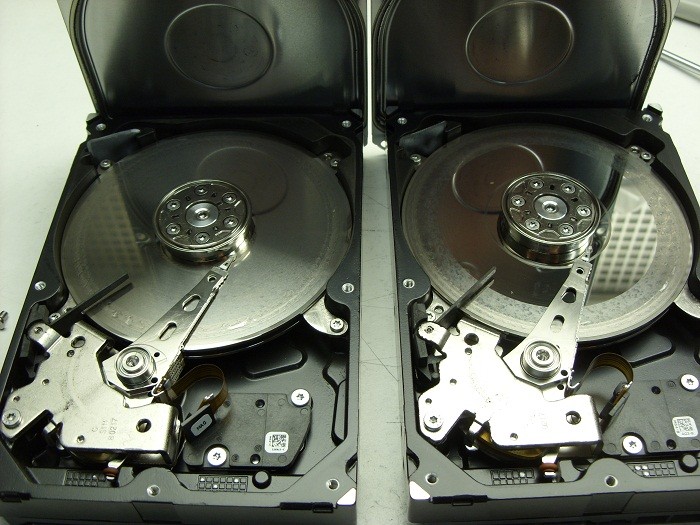
It’s been a while since I’ve posted any astonishing pictures of actual data recovery cases we receive. This morning we received a pair of matching Seagate 7200.11 500GB SATA hard drives that were in such bad shape I just had to share …

2 crashed seagates

They were part of a 2 drive RAID-1 set which means they were exact copies of each other. The client assumed having two copies of their data on two drives would ensure they would be safe. Unfortunately they were wrong.

Their assumption of safety is flawed on a several accounts by my reckoning.

First, both drives are physically in the same box . So if one falls off the table, they both fall of the table. And judging by the physical damage of these two hard drives, this might very well be what happened. Notice the scoring and rings forming all across the disks or platters of both drives. This is a real physical crash where the magnetic coating that was used to retain the data has been scraped off and left scattered through out the drive’s internals as a fine black powder.

Regardless, of how the physical damage happened, it is also apparent that the drives were running for sometime in this state. Typically minor crash debris is collected by a filter located in the top left corner of each drive. The filter is originally white in color but as you can see in the picture, both filters are now black. Crashes like this are also very audible and for a sample of what this sounds like, listen to the recording of one of these drive below.

Secondly, RAID box vendors often recommend you use two identical hard drives as was the situation here. Again, this does not sound like such a good practice to me. If one drive has a manufacturing defect, then there is a good chance the 2nd drive will have the same manufacturing defect, especially if the drives are bought at the same time from the same vendor. And even if the hard drives have no manufacturing defects, their life spans are bound to be very similar. Once one drive fails, the odds of the next one failing shortly after are quite high as well.

If your data is valuable, nothing beats a good back up on a separate distinct device that is stored in a different physical location. But should you find yourself without a backup and a failing RAID box, do your data a favor and shut yourRAID array down immediately and contact Memofix Data Recovery Services for immediate assistance.


another view


Toronto and Vaughan RAID Data Recovery

Enterprise level RAID arrays often use SCSI or SAS (serial attached SCSI) hard disk drives. Compared to PATA and SATA IDE hard drives, SCSI and SAS are not as common. And as a result few data recovery companies have much experience with them.

Fortunately, Memofix (located in Vaughan, Ontario) has been around for so long that we still remember when all servers and RAID arrays used SCSI hard drives. I too have been “around” for a long time and during my 12 years at ActionFront and Seagate Recovery Services I was the “go to guy” for SCSI recoveries. By the end of my career at these Toronto GTA based recovery companies, I was full-time management with the exception of working exclusively on cases that used SCSI hard drives. As a result, I became thee expert at resurrecting dead SCSI and SAS drives. And as they were most often used in RAID arrays, my skills at rebuilding and recovering RAID data was also very good.

At Memofix this expertise has been passed on, but I still personally monitor every SCSI, SAS and RAID array we receive. I believe we are the best in the industry whether that RAID is used on a MAC. Windows, Unix or even a Solaris operating system. If you need some expertise on your failing RAID call the professionals. http://www.memofixdatarecovery.com/data-recovery-raid.php