Data Recovery, recovering Hard Drive data, RAID data recovery

YES we can recover your data, even if others can’t!

As a member of a worldwide consortium called the TSC or Technical Services Consortium, we are part of a family of companies that offer many of the same services, but in different geographical areas. Because we are not competing with each other, we have developed some amazing business relationships with folks that would normally be our competitors. This has allowed us to gain knowledge in areas where we were weak and to share knowledge where we are strong. As the only member of the consortium offering data recovery services, we often get called in to help with data loss situations.

Recently one of our TSC partners in the Netherlands, Sprague Europe, was approached by a well-known University in Germany. The University had had a catastrophic failure with a small RAID 5 server and the hard work of hundreds of students was in jeopardy. RAID server data recovery

Initially the University had contacted a well-respected but smaller data recovery company in the Netherlands to help. They were able to image one of the 3 drives used in the RAID 5 array, but unfortunately, all attempts at resurrecting either of the remaining two drives was met with failure.

With RAID 5 and it’s built in redundancy, we only needed to image one of the two non-responsive drives to be able to rebuild the RAID. Both drives had developed light rings on their disks and the heads were physically destroyed by travelling over the damaged areas and had become stuck in the head loader ramps. With each recovery attempt, these rings would increase in depth and width, and soon no recovery would be possible. The smaller Dutch data recovery company had exhausted their supply of parts drives and realizing the chances for success were decreasing with each attempt, they advised the University to send it to Kroll Ontrack, the largest data recovery company in the world. Ontrack had a branch in Germany and off the case went.

But again, all attempts to recover the data were met with failure and the University was almost ready to concede defeat. But as luck would have it, the head of the University’s Computer Centre was an old colleague with one of our friends at Sprague and in a last ditch effort he called Sprague for advice. Our friend at Sprague suggested Memofix “may” be able to help.

Unlike most data recovery service providers, Memofix does not charge an extra fee for working on hard drives that have been previously worked on by other data recovery companies. In fact we cherish those data recovery cases because it gives us a chance to show just how good we are. Over the years we have recovered approximately 70% of the recoveries that have been previously attempted by our competitors.

western digital data recoveryWhen I first saw the request and the summary of what had been attempted, I was skeptical if we could do any better than the two professional data recovery companies that had already tried, especially when one of them was a “world leader” in data recovery and cost did not appear to be a constraint. I spoke with the original data recovery company that tried the 1st attempts. They told me that both defective drives had heads that were bent, distorted, and stuck in the head ramp loaders. They also told me that they had gotten both defective hard drives to function for a very short period of time after replacing the head assembly. Things were looking a little more promising.

When it comes to recovering data, there is one MAJOR factor that influences the chance of recovering data and that is the condition of the disks. If the disks are in good shape, a recovery is usually going to be possible. If the disks are badly scored and ringed, then it will be next to impossible to get a set of heads to function inside the drive without damaging them almost instantaneously. For a disk to get that badly damaged usually means the drive has been running/spinning in a crashed state for a long time. The fact that these drives had their heads stuck in the loading ramps is good news, as they could no longer damage the disks. The second fact that made us hopeful was that the drives were manufactured by Western Digital and Memofix has one of the best Western Digital data recovery techs that we have ever met and we do know a lot of data recovery techs.

So we decided that we may have a chance of successfully recovering at least some of the data and consequently the case was sent to us for a final data recovery attempt.

Our initial evaluation confirmed that we would need to get one of two defective drives imaged. After much scrutiny it was determined that one of the defective drives had shifted disks. When heads are replaced, there is a procedure for adjusting the disks which can sometimes help in getting access to a non-responsive hard drive. I suspect one of the data recovery service providers had attempted this procedure or something similar. This procedure can sometimes make things worse, so we decided to concentrate on the more pristine of the two drives.

Our Western Digital data recovery specialist got right to work. His first task was to get the drive functional enough to read off the drives system area, a normally inaccessible storage area on the drive used for its own housekeeping and the storing of drive specific settings. The system area tells the drive how many heads are present and what settings to use with each head. Without this road-map, recovery may not be possible.

bent heads comparison
Bent Heads vs Good Heads

We quickly determined that two of the disk surfaces had physical damage and we would worry about those surfaces last. Modifying the system area allowed us to configure the drive to ignore the 2 damaged heads/surfaces. We then physically removed the 2 heads (corresponding to the damaged surfaces) from a good parts head stack. This would prevent further damage to those disk surfaces as well as preventing read interference from the heads going over the damaged areas. We then used this head assembly to get the drive to initialize and we started to image off the good surfaces. After approximately 20 hours of imaging, the heads assembly became too contaminated with crash debris to function and we had to modify a new set of heads to continue. After two days we had managed to image 6 of the 8 disk surfaces. We were now ready to go after the two damaged disk surfaces.

At this stage, our greatest danger was the inherent risk of developing new crashes & destroying our chances of imaging off the last two disk surfaces. Consequently, the drive was imaged only while it could be monitored by a dedicated human watching and listening for any potential new crashes. Imaging of these last two surfaces took almost a week and in the process we consumed five sets of heads and still had some areas where nothing could be read because of the damage to the hard drives’ disks.

With the best drive images we could obtain, we began to analyze what we had. Once we determined the correct RAID 5 configuration settings we were able to use the RAID’s parity to virtually rebuild the missing disk and to de-stripe the 3 drive RAID 5 volume onto a single drive. Then it was a matter of repairing some minor file system structure damage, mounting up the volume, and copying the data to a new target hard drive.

In the end, we were able to recover over 99% of all the students’ data. But there wouldn’t have been any data recovery had it not been for one individual at the University refusing to take NO for an answer.

Consequently, I think the real takeaway point, has to be the fact that not all data recovery companies have the same abilities and just because the world’s largest data recovery company says it can’t be done, doesn’t mean Memofix, the world’s most determined data recovery company, can’t prove them wrong.

We are Memofix, and YES we can recover your data, even if others can’t!

Emergency RAID & Server Data Recovery (647) 448-5302

During the holidays many companies use the down time as an opportunity to update and perform maintenance on their data servers and RAID boxes. This is also a crucial time for data loss to occur, and a time where caution and safety should be of the utmost importance.

At Memofix, we understand that mistakes can happen, hard drives can crash, and servers do become corrupt, so we want you to know, whether you’re in Toronto or anywhere in Canada, we are ready and able to help 24-7, 365 days of the year. If you face a serious data loss & need our emergency data recovery services to ensure your business is back up as soon as possible, please call or text David Foster @ (647) 448-5302 to discuss your situation and how we can help … any time any day.

Happy Holidays to All! … from David Foster & my amazing team at Memofix Data Recovery


Toronto’s Weekend RAID Warriors


It was a beautiful Friday afternoon and the start of the long weekend was only hours away. The boys in the lab all had plans of some sort or another, but then Bob walked in. And RAID away I knew someone’s plans would be changing.

data recovery server

Bob Giannoulis, the head of our Client Services, had just spent the last 20 minutes discussing a huge data loss situation with a potential customer. The customer, one of North America’s largest providers of programmable digital mobile content, had lost a critical server. The live data content stored and constantly refreshed from a big old server was sitting in a huge data centre just a few kilometers from our lab. Their product was used by everyone from government and recreational complexes to big businesses and even Vegas casinos.

Unfortunately, most of these clients had performance contracts which penalized any delay or loss of access to online content. Consequently, our client was under extreme stress as several of his larger clients were threatening to terminate their contracts or pursue legal actions or both.

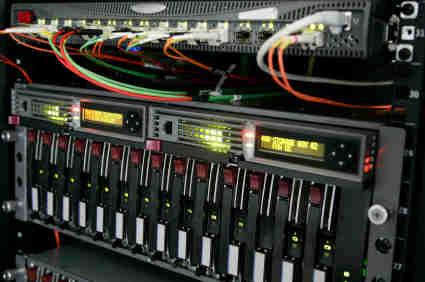
The client was running a RAID 5 setup with 14 hard drives. On Wednesday evening during a thunderstorm the RAID server went down momentarily with a single failed hard drive, but thanks to the redundancy of RAID 5, the server recovered and continued to operate, albeit in a degraded and much slower state. An automatic email message informed our client’s IT people about their hard drive failure and the fact the spare drive was also down. Within an hour or two their tech arrived to replace the defective hard drive and start the 7-8 hour RAID rebuilding process.

After about an hour into the rebuild, things started to go bad! A 2nd hard drive began to physically crash and within minutes the rebuild was aborted in mid process. The IT technician, already driving home, gets a 2nd email message concerning the catastrophic failure of their RAID server and quickly returns to the data center. The server is now totally down and none of their digital content servers can “call home”. No worries, he’ll just swap out the failed drive and re-start the rebuild process. But the rebuild apparently wouldn’t start, likely due to the fact there were now 2 disk drives down. More hands are called in, and with sparse options they decide to restore a backup of the RAID server to a new set of drives and use one of these drives from the back up set to rebuild the downed RAID array. As Friday morning arrives, the IT teams latest attempts are deemed a failure and the pressure to get the server up is not letting up.

I think it’s worth noting that RAID of any type is NOT a replacement for a good backup. Yes the R in RAID stands for redundant but the redundancy is very delicate and often short lived. You see, the redundancy in RAID 5 is based on being able to replicate the data from ONE failed hard drive, but once one drive fails the odds greatly increase that a second drive will fail shortly after. It makes sense when you consider most RAID arrays are built with identical drives, bought on the same day from the same supplier. They are semi-clones of each other, so as a critical component begins to fail on one drive, it’s just as likely to begin to fail on another hard drive. Add in the extra stress of rebuilding the complete array and it’s pretty clear that disaster is lurking just around the corner.

This is about the spot where Memofix Data Recovery Services comes back into the picture … just after 4pm on the Friday of the Canada Day long weekend a panic stricken gentlemen and a young nerdy guy walk into our facility and hand deliver their RAID server to us. They look tired, frazzled and beaten. This is our first challenge … to give them hope! We know if the data they need is still there, and if they didn’t do too much to the RAID array, we should be able to get it back! The client’s nerdy young guy is their lead IT tech and he’s mentally quick and thankfully possesses a solid memory of each step that was taken in their own efforts to resurrect the RAID server. Our tech and the nerdy young guy are quickly sharing the details of the situation and it’s not long before our confidence and positivity lifts the spirits of our once saddened clients. We are given the approval to do whatever we can to get their data back by Tuesday morning.

SAS drives for RAID 5 data recovery

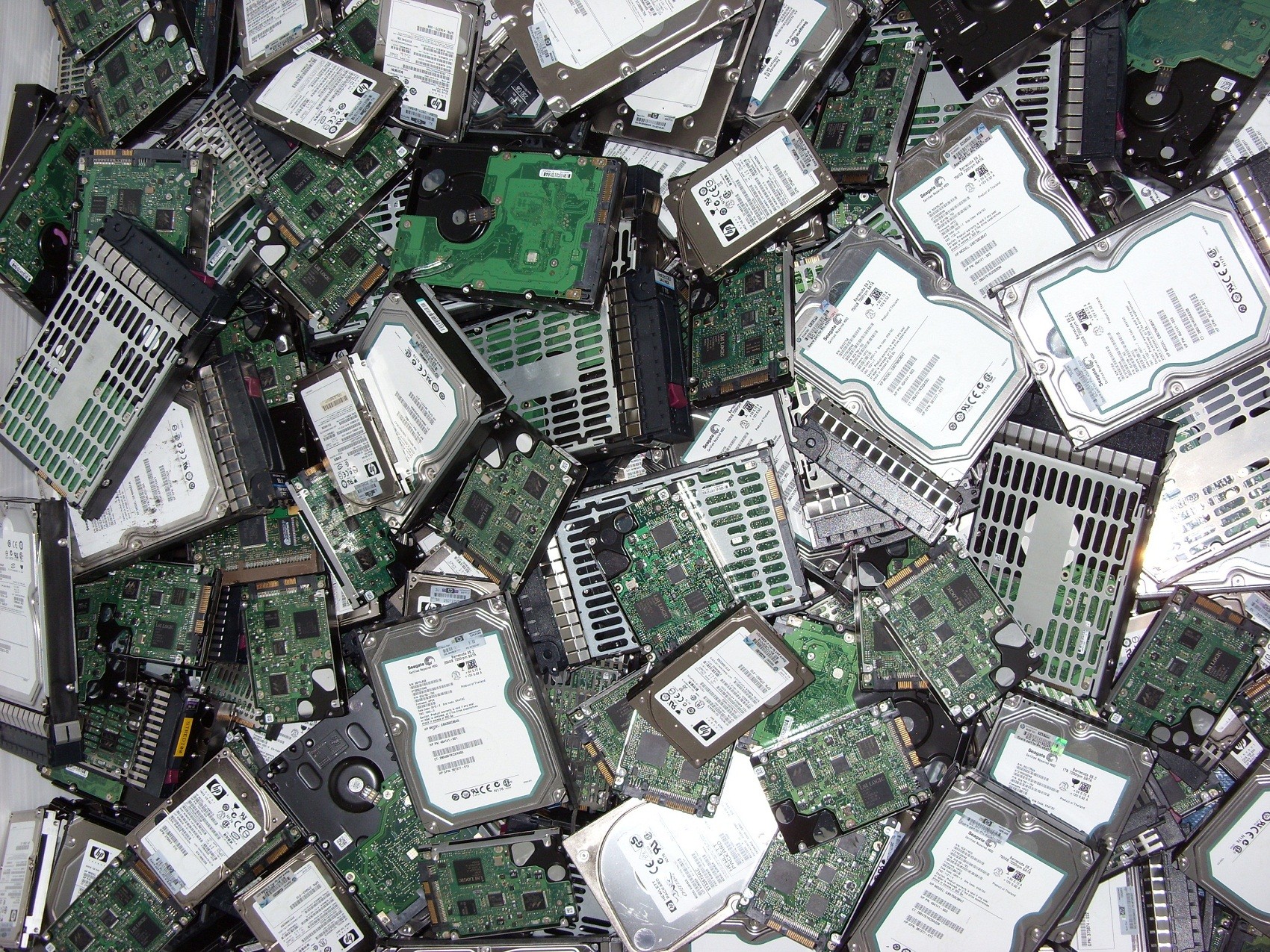
With no further ado, we are left alone in our lab to try and resurrect this fallen giant of a storage device. It consists of fourteen 300 GB SAS hard drives and a few extra hard drives still to be sorted out. As always, we began by creating duplicate images of all the working drives before turning our attention to the failed disk drives. Often when a RAID reports a hard drive being down or offline it’s not actually dead or defective, so we 1st diagnose the two drives to see if either is accessible. We are hoping if we can get just one of the two drives working we’ll be able to rebuild the RAID array.

Briefly applying power to the 1st drive initiates a horrible screeching noise that we’ve heard way too often. This drive is likely badly crashed and a quick inspection under class 100 cleanroom conditions reveals it to be true. There are a series of deep rings across the top disk surface and most likely similar damage below. This drive will not be recoverable. Yikes!

Diagnosing the second drive, we are relieved to find the drive in a functional state with no painful noises being heard. However, the drive has triggered its built-in SMART monitoring system to report problems but the drive is still accessible. We quickly determine the cause of the SMART errors is due to one of the heads being defective and unable to read. Inspecting the hard drive’s three disks under class 100 cleanroom conditions shows no visible or apparent disk damage and removing the heads and inspecting them under a microscope shows no damage as well. This is good.

Checking our database of parts drive shows we have 3 of these exact model drives to use for parts and it isn’t long before our best cleanroom technician has the drive happily but slowly imaging along. It’s almost 8pm now and the imaging will likely take 5-6 hours. We decide to use this time to fuel up on some food and get some rest. The plan is for our best RAID file system specialists to return to the lab on Saturday morning and assuming the imaging is complete, continue with the recovery.

Our tech arrives at 8:30 am and as expected all the imaging has completed. There are a few read errors on the drive that required new heads but otherwise everything looks good. Now the task is to determine the original RAID configuration such as the proper drive order, the stripe size and the parity scheme. Sometimes the configuration is easy to determine, but due to the repeated attempts to self-fix the array we have our work cut out for us. By 1 pm we are fairly certain we have the correct parameters and we attempt to mount the RAID array virtually. But something is not right and we spend another 4 hours before we successfully mount the RAID 5 array virtually.

With the RAID 5 array now properly setup, we can mount the clients DATA volume. But nothing is straight forward here and our attempts to copy off the data using the DATA volumes own NTFS file system prove futile, especially on many of the identified critical files. Our tech has spent the better part of the day working on the world’s biggest jigsaw puzzle and he’s getting mentally tired so we decide to call it quits for the day.

Sunday morning arrives and our RAID specialist digs into the new problem. There appears to have been some overwrite or corruption of the volume’s MFT or Master File Table which acts as an index pointing to the location of files. Again, several more hours are spent searching through the RAID array for matching fragments of the MFT that we can use to repair the damaged areas. We are successful in finding the final missing remnants buried deep within some temporary system files. The MFT is now repaired, the DATA volume mounted and the copying of the data begins. Our tech now heads home but continues to monitor the case remotely. The copy completes during the holiday Monday and he tests a large sample of the data and ensures it loads error free. We can now declare this successful and a quick call to the client has them meeting up with our tech at our lab to pick up the data. If smiles were dollars we would be rich!

As a service provider of last resort, we tend to see the worst scenarios and this was no different. Nobody likes to call in outside help, especially if your reputation is built on data security and you have a potential data loss situation. But if you find yourself in a similar situation do the right thing and bring in the professionals. At the very least we will stop any further damage by capturing protected images of all the hard drives before any more modifications are made.

Memofix provides users with a 24-7-365 day cell number for contacting us off hours or on weekends. If disaster should strike you at an inopportune time please call me, David at (647) 448-5302 to arrange an emergency intervention.

* note: the actual business description has been misrepresented to protect our client’s identity

Memofix at iTech 2013 Toronto

We love talking about IT with our customers, particularly if it involves storage technology. We are a company of geeks who are always willing to share our technical expertise on hard disks, tape drives and data recovery with clients and business partners. And now we’re being allowed out in public.

Memofix will be at iTech 2013, at the Toronto International Centre, on Thursday, May 16th. For the past decade iTech has become known as Canada’s IT Infrastructure Conference and allows technology professionals to speak one-on-one with industry vendors, all in one place. The seminar sessions deliver information on the latest trends, cutting edge products and services and help them research solutions for their IT strategy.

We are excited to be at the show because it gives us an opportunity to meet with many of our past clients and discuss the challenges they have in the area of storage. More importantly we love meeting new customers who get to find out what we are all about. We think a face-to-face conversation allows us to convey our love for all things storage and build a trust factor based on our expertise and the fact that we love to help solve problems.

At the conference we will be focusing on 3 important services that generate the most interest from our customers.

Data Recovery: A malfunctioning storage device can be a minor nuisance or severely disrupt your business operations. Unfortunately the failure of hard drives, RAID arrays, and other data storage technologies is a fact of life. Find out how Memofix can serve as your emergency support partner and how we retrieve or recover data from all types of data storage media. Businesses of all sizes across Canada put their trust in Memofix Data Recovery Services to recover data from hard disks, tape cartridges flash media of all categories and NAS, SAN, and multi-disk servers.

Tape and Hard Disk Repair: All the industry experts will tell you, “Tape is dead”. For companies that continue to use tape as their backup or archive strategy it is getting harder to find a support vendor and there are few service organizations in North America that specialize in tape drive repair. Memofix, with 25 years of experience, is among that select group and we provide direct support for some of the largest manufacturers of tape storage technologies. Our tape and hard disk repair services allow companies to extend their IT budgets by keeping existing devices running and avoiding an early replacement. We also offer extended warranties for tape storage devices that are very cost competitive with OEM alternatives.

Cloud Backup: The future of backup is not cloudy (sorry, bad pun). As companies cope with ever increasing amounts of information they realize that it’s critical to have a dependable backup solution that can scale with their business needs. Come by our iTech booth and find out how our Cloud Backup solution can prioritize files for backup and securely transmit an encrypted copy to an offsite Canadian-based data centers. The Memofix Cloud Backup service can save you money, simplify your IT operations and give you an increased sense of security about your data.

Since 1986 Memofix has been a Canadian market leader specializing in the repair of storage devices, data recovery solutions and partnering with manufacturers as their warranty depot. Our company takes pride in the professionalism of and experience of our technicians and our process of continual improvement. Come by our booth at the iTech conference and find out why we are quality obsessed and customer focused.

The Challenge of Being Unique

Today’s blog features a guest post from Andrew Gotshal, one of the original founders of Memofix. – David Foster

Occasionally, when meeting with manufacturer partners or corporate executives, I’m asked what makes Memofix different in the marketplace. What sets us apart from other technical services organizations? What unique advantage or value do we provide to customers?

It’s easy for us to list all the important stuff that OEMs and customers want to hear. With over 25 years of experience we have a proven track record. The majority of our business comes from returning clients and word of mouth referrals, demonstrating our commitment to customer satisfaction and quality. We regularly pass performance tests and service level agreement metrics with our manufacturers; which means we deliver on our depot warranty commitments. Our technical expertise allows us to tackle tough problems and provide complete solutions. But most competitors who are focused on customer responsiveness and quality can provide those same attributes. So why are we different?

Server data recovery

Our company is a family of individuals from different backgrounds and unified by one important characteristic – we’re Geeks. Capital “G” Geeks who want to understand the technology that we are working on, to figure out why a problem is occurring, how do we fix it and can we make recommendations to ensure it doesn’t happen again. Customers who throw us unique challenges tell us that they like our thought process. Instead of jumping to a conclusion we start running through the various scenarios that could result in the reported problem. Then we start our testing process to eliminate one or the other and focus on the root cause. Think of us as the child who takes apart the family computer so we can figure out how it works. Except when we put it back together again, we’ve made a few improvements and it runs a lot better.

Memofix loves storage technology, it runs in our blood. That’s not to say we are singularly focused – we are after all one of the largest national providers of depot services for a leading notebook OEM. But in the same way that you have a fondness for that first person you dated seriously, we look back on our start as the repair centre for the first Seagate drives that entered the Canadian market. This has led to our investment in specialized equipment to analyze and recertify hard drives. Because we have some of the brightest technicians in Canada we are one of a select group in North America that can repair hard disks and complex tape backup technology. Our membership in the Technical Services Consortium (www.tsc-ww.com) gives us global access to service expertise, parts and process improvement. After almost 30 years in this industry we continue to look for ways to improve our capabilities and provide more value to our business partners and customers.

We have tackled some unique challenges for our customers and the ones that we are proudest of generally were not the most profitable but they appealed to our Geek side. Here are some examples:

  • A clinic in Haiti relied on their 20 year old X-Ray machine to provide badly needed medical care. When the hard disk started to malfunction they searched extensively for a solution because replacement was not an option. We were able to supply the parts needed from our spares (largest spare parts inventory in Canada), recover the data and earn a big thank-you from the medical staff.
  • Customers regularly come to us with specialized production equipment that is decades old, with a similarly aged hard disk as an important component. In almost every case we have the parts and the technical expertise to keep this equipment running, including a 3.2MB hard disk that we provided to a data recovery customer just last week.
  • Where a replacement drive is not available for an older system, we have been successful in using newer drives and reducing the capacity so that it will be accepted by the legacy operating system or application (known as destroking). In some cases our technicians will also need to reconfigure the firmware on the drive, an important skill for us and rarely found outside OEM organizations.
  • During the recent hard disk shortage, caused by flooding in the Philippines, several OEMs approached us to leverage our expertise in firmware re-configuration, in an effort to use alternative drives for computers that had been designed for specific models and brands of hard drives.
  • We have been able to provide feedback to our OEM partners on their testing process, helping them to understand that perfectly good drives were failing due to their audit software. The result for our manufacturer partner was a higher yield and lower replacement costs.
  • Several retail chains rely on us to wipe personal data from storage devices returned by their customers. Wiping Xbox hard drives and flash drives presents a unique challenge because the operating system is embedded with the consumer data. Our technicians were able to create an algorithm which would detect where the OS is located on the HDD or flash drive. This meant wiping all data up to the OS, recognize where the OS is and leave it intact, and start removing consumer data immediately after.

Another important element of our uniqueness is attitude. We are never more important than the customer’s we serve. We customize programs to accommodate the customer’s process branding, financial models, and security. Manufacturers come to Memofix in order to reduce their costs and we approach each new project with that objective in mind, including pricing our services based on the OEM realizing those financial savings. We are willing to share the risk and create a partnership versus simply being a supplier.

The challenge of being unique comes from constant re-evaluation of what’s important for your partners and clients, and how we adapt to meet those changing needs. To be relevant to the marketplace you have to stay focused on the customer and not your competitors. You have to resist the urge to concentrate on revenue and expense reduction, and instead invest in skills, people, technology and process in order to be successful through long-term relationships. We try to meet that challenge every day and so far our customers are telling us that we’re doing OK.

Andrew Gotshal

Founder, Memofix


Let’s Get Green($): Redeploying old Hard Drives

This blog regularly focuses on the issues around data recovery and important considerations in maintaining your storage devices. But today I’d like to highlight an interesting service from Memofix through a guest post by our CEO, Chris Rathgeber. – David Foster

Memofix has more than two decades of experience in providing warranty depot service for technology manufacturers, computer resellers and businesses of all size. We provide solutions for a variety of devices but we have a particular focus and passion for all things related to storage. This has allowed us to build some unique customer programs that reduce risk and recover value for assets that have been deemed obsolete.

Hard drive shipments world-wide continue to increase with some 300 million delivered in the first half of 2012 (IHS.com). IT managers are replacing thousands of hard drives each month across Canada and we deal with the asset disposition process for a significant amount, either directly or through our partnerships with manufacturers or resellers. They may be upgrading to newer technologies, like SSD, or adding capacity or simply reducing the number of storage devices by relying on cloud based solution providers. These IT refresh or upgrade projects end up displacing an equal or greater amount older storage devices.

All IT managers should be exploring the possible trade-in value for any storage devices that are replaced in their environment. Many can be sold to other companies who are increasing storage capacity in a network environment that is standardized on older technology. Hard disks and tape drives, once audited and refurbished, can be sold as service spares to a wide variety of customers. Some may have more value to be broken down into key components and used as spare parts. Our team has been able to find customers for older hard disks of all capacities, tape drives, network drive enclosures, tape libraries, auto-loaders and other storage related components.


The most critical issue for any customer, when considering the re-marketing of hard drives from their facility, will be data security. There is always a concern that one of their hard disks will be resold with information that can be accessed by a potential future buyer. We believe that Memofix delivers a level of security that customer can rely on, that no data can be retrieved and they can extract full value for the re-marketed device. In the 25 years that we have been delivering data recovery solutions, hard drive repairs and data destruction services we have never had a single incident of a data breech. The manufacturing leaders in storage technology rely on us for this level of security as do some of the largest IT departments in Canada. Once devices have gone through our audit and data wipe process, they can be re-marketed and the recovery value can underwrite the replacement units or future operational costs.

We’re a bit obsessive about the details when we take on an asset disposition project for our clients. We establish a secure chain of custody that matches our customer’s need for security. All assets are received and detailed reports are created that allow us to track each asset through our various phases of audit, test, data wipe, refurbishing, packaging and ultimate payment to the client. These reports account for every asset and ensure that they can be removed from the customer’s accounting application. We utilize our data recovery division to random test devices during the data wipe process to guarantee that our procedures are working as expected. Approximately 25% of drives cannot be wiped effectively because the device does not function properly. These are degaussed and shredded to endure data security standards are met.

Memofix is known as a quality supplier of refurbished storage with all products backed by warranties that are best in the industry. A hard drive with a single bad sector will fail our testing process and will not be resold. This level of quality means we demand premium prices for our refurbished inventory which results in higher trade-in values paid to our asset disposition customers. All hardware that fails while in testing, or that has no re-marketing value, is recycled responsibly meeting strict Canadian ewaste guidelines.

We regularly manage the physical destruction of thousands of hard drives as directed by our customers despite our knowledge that many have value in the re-marketing and service channel. Some companies have no appetite for risk and will remove all storage devices for shredding and recycling and we follow instructions accordingly. But we will provide an analysis of the potential trade-in value of all devices so the client can weigh the benefits of pursuing that option. For several customers their confidence in our secure processing has resulted in valuable recovery dollars flowing back into their IT operations.

Please consider partnering with Memofix as a key supplier for asset disposition services focused on storage technology. Whether your project is large or small, or you deal with us directly or through a trusted computer reseller, we can provide data wipe solutions and re-marketing programs that give you peace of mind for your retired assets along with funds for extending your IT budget.

Chris Rathgeber, CEO Memofix

RAID Disaster Area!

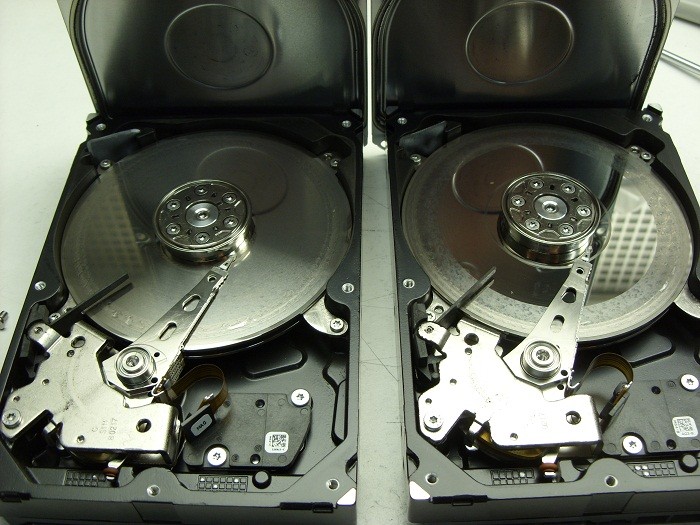
It’s been a while since I’ve posted any astonishing pictures of actual data recovery cases we receive. This morning we received a pair of matching Seagate 7200.11 500GB SATA hard drives that were in such bad shape I just had to share …

2 crashed seagates

They were part of a 2 drive RAID-1 set which means they were exact copies of each other. The client assumed having two copies of their data on two drives would ensure they would be safe. Unfortunately they were wrong.

Their assumption of safety is flawed on a several accounts by my reckoning.

First, both drives are physically in the same box . So if one falls off the table, they both fall of the table. And judging by the physical damage of these two hard drives, this might very well be what happened. Notice the scoring and rings forming all across the disks or platters of both drives. This is a real physical crash where the magnetic coating that was used to retain the data has been scraped off and left scattered through out the drive’s internals as a fine black powder.

Regardless, of how the physical damage happened, it is also apparent that the drives were running for sometime in this state. Typically minor crash debris is collected by a filter located in the top left corner of each drive. The filter is originally white in color but as you can see in the picture, both filters are now black. Crashes like this are also very audible and for a sample of what this sounds like, listen to the recording of one of these drive below.

Secondly, RAID box vendors often recommend you use two identical hard drives as was the situation here. Again, this does not sound like such a good practice to me. If one drive has a manufacturing defect, then there is a good chance the 2nd drive will have the same manufacturing defect, especially if the drives are bought at the same time from the same vendor. And even if the hard drives have no manufacturing defects, their life spans are bound to be very similar. Once one drive fails, the odds of the next one failing shortly after are quite high as well.

If your data is valuable, nothing beats a good back up on a separate distinct device that is stored in a different physical location. But should you find yourself without a backup and a failing RAID box, do your data a favor and shut yourRAID array down immediately and contact Memofix Data Recovery Services for immediate assistance.


another view


Data Recovery and the Thailand floods

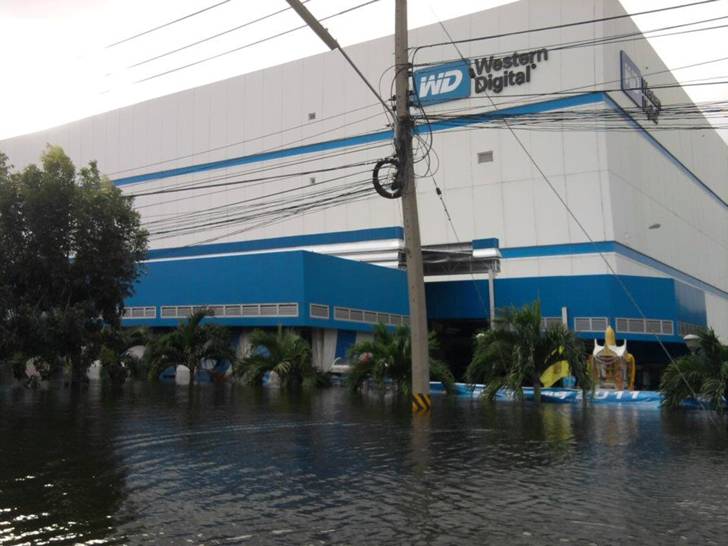
If you’re not aware, Thailand, the 2nd largest producer of hard drives in the world, has been experiencing some intense flooding which in turn has significantly depleted the worldwide supply of hard disk drives. Western Digital appears to be the worst hit and as result will likely lose its ranking as the #1 producer of disc drives.

WD headquarters under water

Does this affect the data recovery business? YES, you may pay more.

The majority of Data Recovery cases require the replacement of various defective hard drive components and in particular the head assembly. These individual hard drive components cannot be bought on the open market and consequently data recovery companies source complete hard drives for breaking down into parts. This need for specific hard drive parts has in turn fostered a growing business in used hard drive sales. And while a disk drive may have originally sold for $79, these vendors have long been demanding double the price when supplying a data recovery service provider.

NOW, with the worldwide shortage of new hard drives, the used hard drive market is exploding and prices are exploding even more. Many data recovery companies will need to start charging higher rates to cover the increase in parts cost. However, Memofix Data Recovery Services sources 98% of its parts drives from our mother company Memofix Hitech Services and as a result we rarely need to order parts. Memofix has over 26,000 hard drives in stock and services up to 3000 new hard drive every month. With such a large supply we charge less, try harder and complete recoveries quicker. When it matters, call Memofix!

https://www.memofixdatarecovery.com/data-recovery-hard-drive.php